Ragdoll color guide

Blue Bicolor Ragdoll

A closer look at the color, markings and development of the blue bicolor combination.

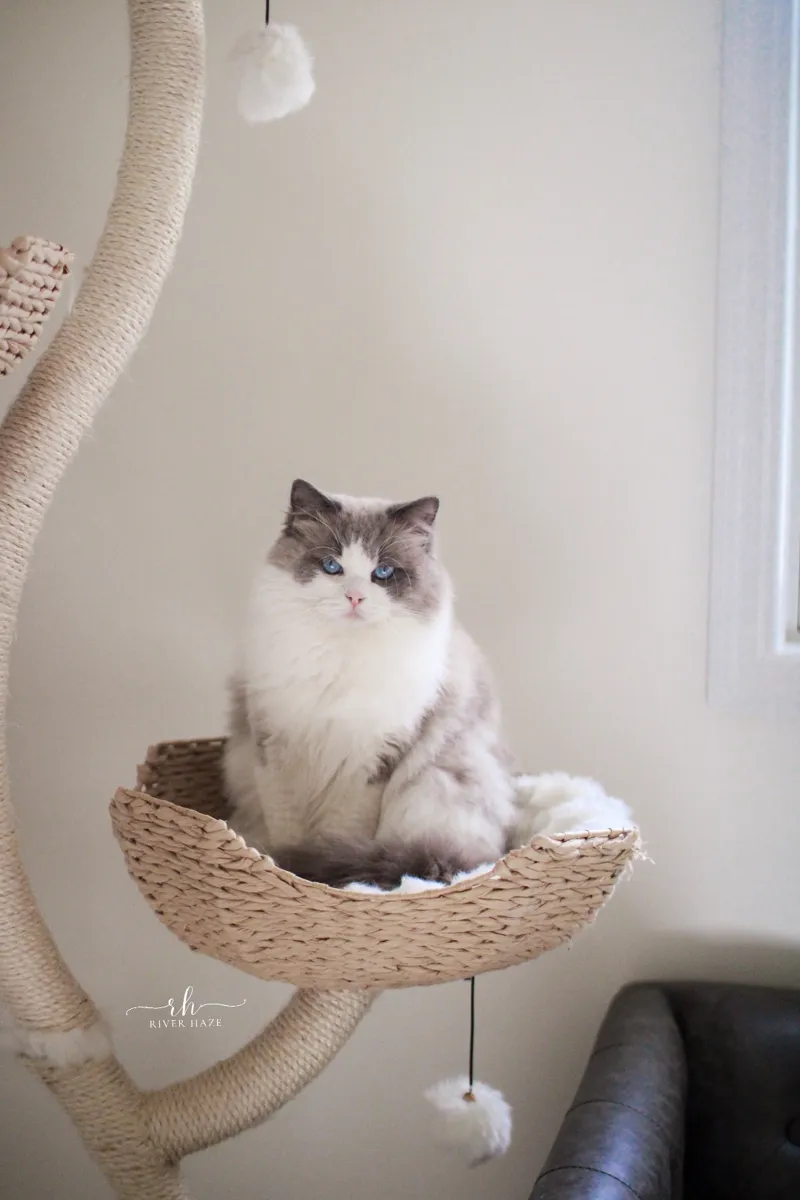
Wolfe, a Blue Bicolor Ragdoll at River Haze Ragdolls

What defines a Blue Bicolor Ragdoll?

Blue describes cool grey points. As the coat develops, those cooler tones become easier to see against the lighter body. The bicolor pattern is recognized by a white inverted “V” on the face, along with white legs and a white belly. Ragdoll kittens are born mostly white, so the full effect is not visible at birth. Their point color and markings develop gradually over the following weeks, making each stage interesting to watch.

Reading the full color-and-pattern name makes the markings easier to understand. The first word identifies the point color. The rest describes the placement of white and, when “lynx” is included, the striping visible across the points. Looking at those traits separately helps families compare this combination with the other Ragdoll looks we produce.

What to look for as kittens mature

As a blue bicolor kitten matures, look for the cool grey points to become more visible while the inverted white facial marking, legs and belly remain the defining pattern features.

Because color develops gradually, early kitten photos may look much lighter than later ones. The combination is best understood by looking at both parts of the name: the point color and the placement of white or lynx markings.

Those gradual changes are also why photos taken only a few weeks apart can look noticeably different. The kitten remains the same color and pattern; the contrast is simply becoming easier to see. We share the color and pattern assigned to each kitten so families can follow that development without expecting the finished adult look from the earliest photos.

Meet ours

Wolfe

Wolfe shows the soft contrast families often notice in a blue bicolor Ragdoll.

Meet Wolfe →

Common questions

What color is a Blue Bicolor Ragdoll?

Blue describes cool grey points. As the coat develops, those cooler tones become easier to see against the lighter body. The bicolor pattern is recognized by a white inverted “V” on the face, along with white legs and a white belly.

Are Blue Bicolor kittens born with their full color?

No. Ragdoll kittens are born mostly white, and their point color and markings develop over the following weeks.

Does a Blue Bicolor kitten cost more?

No. Every River Haze kitten is priced the same regardless of color or pattern.

Equal pricing for every color

Every River Haze kitten is priced the same regardless of color or pattern. Our flat-rate approach keeps the focus on finding the right kitten for your family.

Find your River Haze Ragdoll